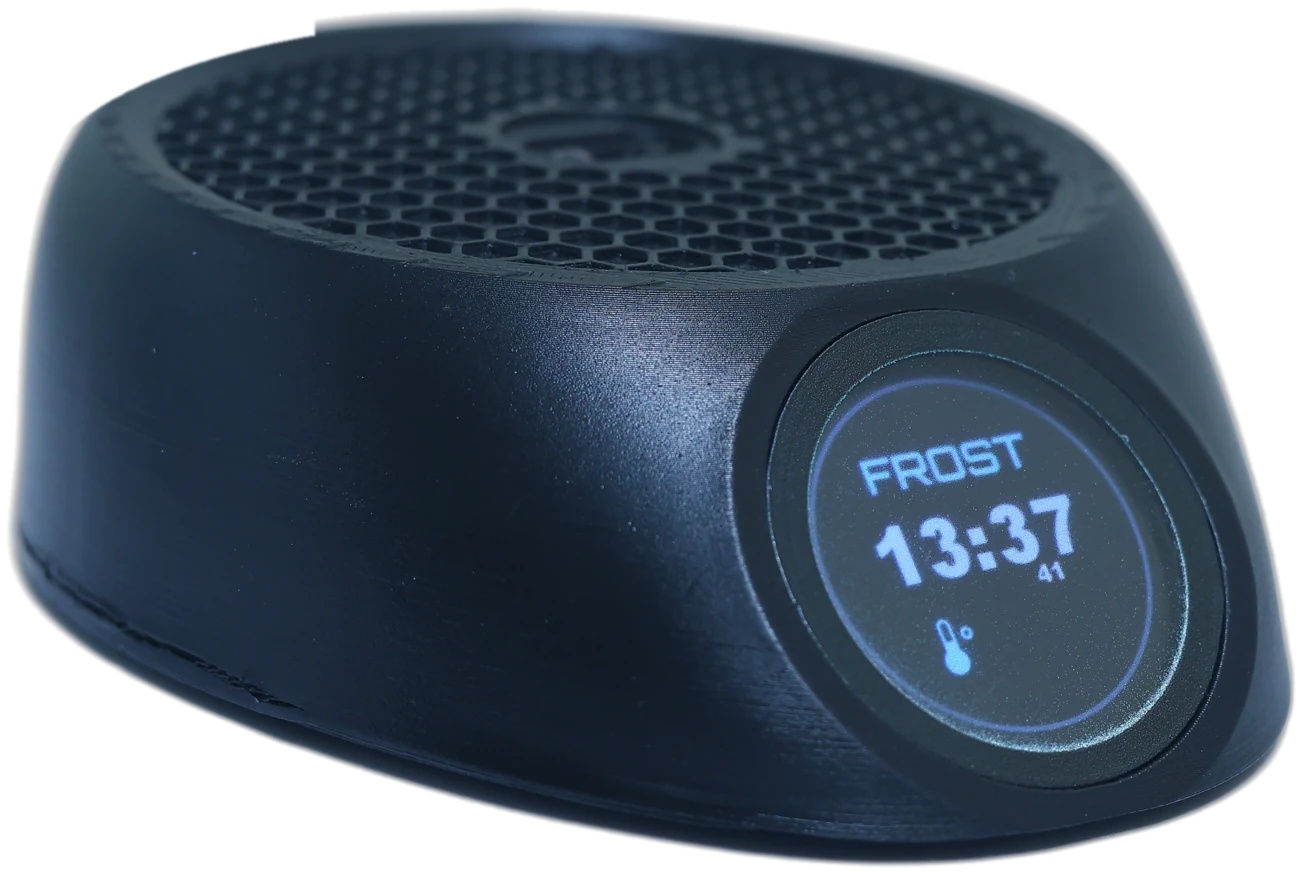
Seven findings from habit research, and what each one means for how Aura works.
43%
Almost half your day runs on habit.
When researchers asked people what they were doing throughout the day, about 43% of what they did was done almost every day, in the same situation, often while thinking about something else.
So Aura works with habits rather than willpower, making the good ones part of your normal day.
Decisions and willpower work in the short term but fade faster than habits. Under stress or when tired, people fall back on the routines they already have.
So Aura puts the cue in your surroundings, so a new habit doesn't depend on remembering it on a busy day.
A habit is an action that a cue in your surroundings triggers automatically. The way to build one is to repeat a simple action in the same context, such as "after breakfast", until it feels effortless.
So Aura stays in one spot on your desk, where the habit happens, every day.
A four-week study of habit-forming apps found that phone reminders helped people repeat a task but got in the way of it becoming a habit, while cues tied to everyday events made it more automatic. A review of 115 habit apps found most focus on tracking and reminders.
So Aura is the cue, not another notification: a quiet screen beside the bottle or mug you already use.
The Tiny Habits method anchors a very small new action to something you already do every day, then adds a small celebration straight after, so the habit feels good.
So Aura shows "Done" the moment you do it. A small win you can see.
In a well-known study, 96 volunteers each picked a daily habit, like fruit with lunch or a run before dinner, and repeated it for 84 days. Among those whose data could be modelled, the median time for it to feel automatic was 66 days. It ranged from 18 days to a predicted 254. Missing a single day had little effect; many missed days did.
So Aura counts your days to 66 and never scolds. Missed one? Start again tomorrow.
The everyday habits Aura cues most often, and what research says about each one.
First, your attention
3×
more mistakes in one lab test
A beep pulls you out of what you're doing.
In one study, students who got a call or text during an attention test, without even looking at it, made about three times as many mistakes. In another, people who were interrupted worked faster but felt more stressed.
Aura cues on its screen, quietly. It sits in the corner of your eye, so you notice it when you're ready. Designers call this calm technology.
In lab studies, young men who lost that much water reported more tiredness and tension and made more errors on attention tests. Young women in a similar study felt lower in mood, had more headaches and found tasks harder.
Habit idea: a glass after you wake up, then a sip every hour at your desk. Lift your bottle and put it back on Aura, and it's logged.
Across 22 studies, breaks of ten minutes or less were linked to more energy and less fatigue. They didn't make people work better on every task, so think of them as looking after yourself, not a productivity hack.
Habit idea: a five-minute break between calls. Step away, refill your mug, come back.
In a lab study, adults who took a 2-minute light walk every 20 minutes had a smaller blood sugar rise after a meal than when they sat for 5 hours straight. That's a lab result about walking breaks, not something Aura has been tested for.
Habit idea: stand up and walk for two minutes, every 45 minutes at your desk.
A timer can make breaks easier. Coming before mass production
Students who studied in fixed blocks of 24 minutes with a 6-minute break felt less tired and distracted, and more focused and motivated, than students who took breaks whenever they felt like it. They got the same work done.
Focus sessions on Aura's screen, with the ring closing as you work.
Five minutes of slow breathing. Coming before mass production
People who did 5 minutes of "cyclic sighing" a day for a month (two breaths in through the nose, one long breath out) saw their mood improve more than a group doing mindfulness meditation.
A slow light on Aura's screen to breathe along with.
You may have heard that water picks up vibrations, or changes with music and kind words. There's no reliable scientific evidence for that; the experiments behind those claims were never confirmed in careful, blinded tests. Read more.
The good feeling is real, though. It comes from the habit: you stop, breathe, notice the screen and take a sip. That moment is for you.
These studies are about the habits themselves. Aura hasn't been tested for these outcomes. General information, not medical advice. Aura is a habit partner, not a medical product. If you have a heart or kidney condition, or your doctor has told you to limit fluids, follow their advice.